Repository-grounded retrieval-augmented code generation (RACG) is increasingly used in embedded IoT development by retrieving code and documentation from a pinned RTOS/SDK repository (e.g., Zephyr OS). In this setting, security risks are often version-inherited: even without retrieval poisoning, generated applications may invoke benign-looking public APIs that transitively reach vulnerable internal routines in the pinned snapshot, thereby inheriting known CVEs. Existing secure RACG pipelines largely focus on task-level intent and generic vulnerability patterns, which can miss repository- and version-specific exposure. Meanwhile, conventional CVE scanners can flag vulnerable locations but cannot determine whether those vulnerabilities are reachable through the public APIs that the generator commits to during repository-grounded generation. In this paper, we present IoTRAGuarder, a contextual knowledge injection framework that aligns security hardening with generation-time API selection under repository grounding. IoTRAGuarder (i) recovers auditable reverse call chains from CVE-localized internals to exposing public APIs via static analysis plus an evidence-gated LLM to bridge indirections and macro-driven "call-graph islands", (ii) constructs a version-aware security knowledge base that binds affected version intervals to exposed public APIs with prompt-ready constraints, safer alternatives, or avoidance/upgrade guidance, and (iii) performs dual-layer, API-aligned online retrieval to inject concise, version-matched constraints into the final prompt. We evaluate IoTRAGuarder on 44 real-world Zephyr tasks across four LLMs. Compared to the prior state-of-the-art secure RACG baseline, IoTRAGuarder improves the overall security success rate from 5.11% to 78.41%.
 |
Wei Dong 董玮 Changjiang Distinguished Professor
|
| News | Projects | Publications | Grants | Awards | Talks | Misc |
Biography
Wei Dong is currently a professor at the College of Computer Science and Technology in Zhejiang University. He received the BS degree and PhD degree from the College of Computer Science and Technology in Zhejiang University in 2005 and 2010, respectively. He was a Postdoc Fellow at the Department of Computer Science and Engineering in Hong Kong University of Science and Technology in 2011. He joined in Zhejiang University as a faculty member in Feb., 2012. He leads the Emerging Networked Systems research group (EmNets). His current research interests include AIoT, IoT data security, edge computing, and wireless networking.News
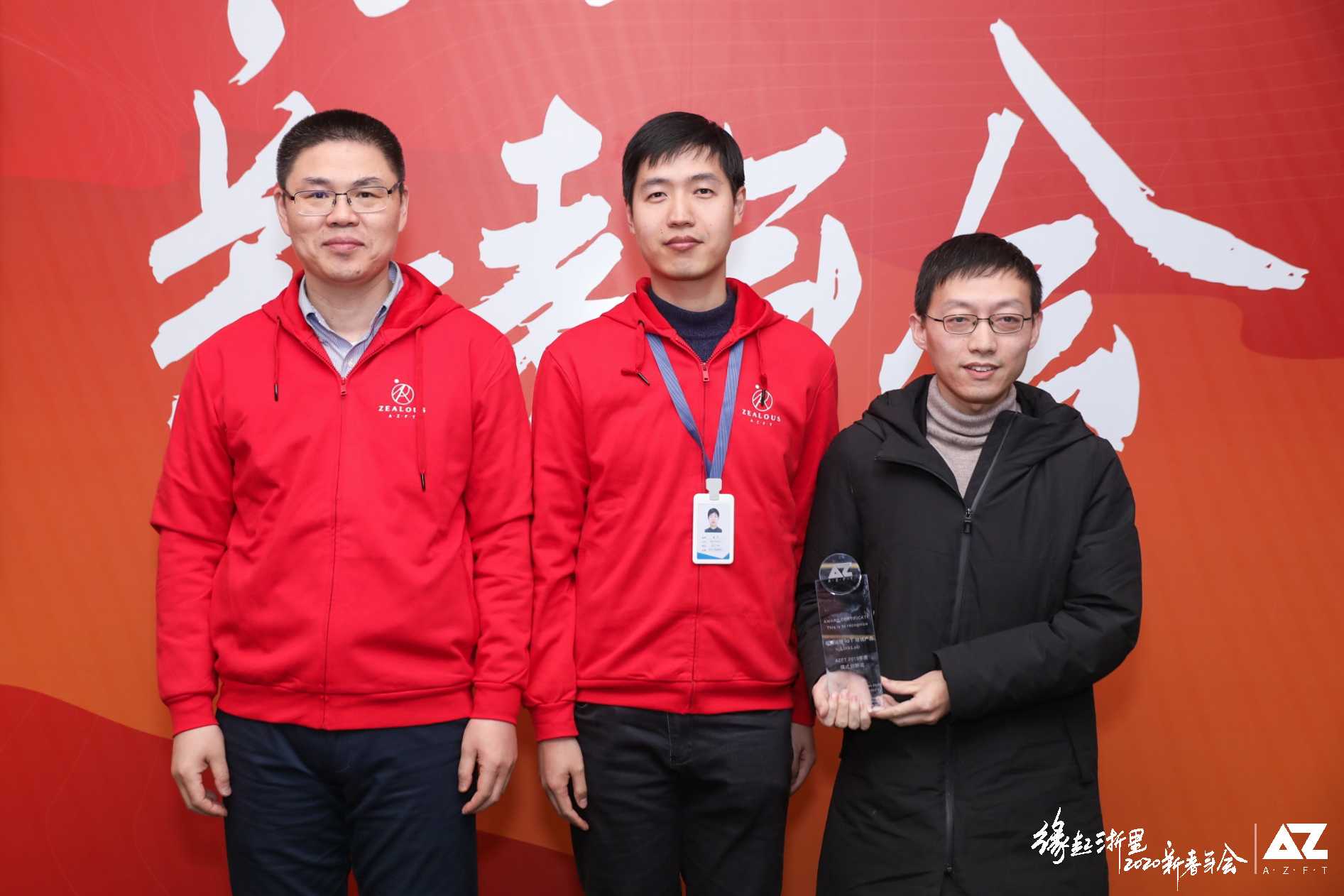

- We have won the CCF Second Class Award for Technological Invention 2025.
- We have won the Zhejiang Provincial First Class Award for Science and Technology Progress 2023.
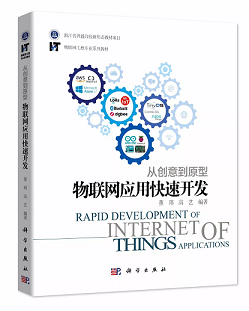
- 《从创意到原型:物联网应用快速开发(第2版)》, 科学出版社. (京东链接)
- [2026.09] Two papers are conditionally accepted to ACM SenSys 2027.
- [2026.08] One paper is accepted to EMNLP 2026.
- [2026.07] One paper is accepted to ACM Transactions on Internet Technology.
- [2026.07] Two papers are accepted to IMWUT/UbiComp 2026.
- [2026.05] One paper is accepted to IEEE Transactions on Mobile Computing.
- [2026.05] One paper is accepted to USENIX Security 2026.
- [2026.05] One paper is accepted to ICML 2026.
- [2026.04] Two papers are accepted to IEEE ICDCS 2026.
- [2026.04] One paper is accepted to IEEE Transactions on Mobile Computing.
- [2026.03] One paper is accepted to IEEE Transactions on Mobile Computing.
- [2026.01] One paper is accepted to The ACM Web Conference 2026.
- [2025.11] One paper is accepted to AAAI 2026.
- [2025.08] One paper is accepted to IMWUT/UbiComp 2025.
- [2025.06] One paper is accepted to IEEE Transactions on Mobile Computing.
- [2025.05] Our paper "TensorShield" is accepted to ACM CCS 2025.
- [2025.05] One paper is accepted to ACL 2025.
- [2025.04] Our paper "WasmRL" is accepted to ACM Transactions on Internet Technology.
- [2025.03] Our paper "IoTPilot" is conditionally accepted to ACM MobiSys 2025.
- [2025.03] One paper is accepted to ACM Transactions on Storage.
- [2025.01] Our paper "TimeChain" is accepted to The ACM Web Conference 2025.
- [2024.12] Our paper "LoRa over BLE" is accepted to ACM MobiCom 2025.
- [2024.11] One paper is accepted to IEEE Transactions on Computers.
- [2024.11] One paper is accepted to ACM Transactions on Internet Technology.
- [2024.09] One paper is conditionally accepted to ACM SenSys 2024.
- [2024.09] Our paper ChatCam is accepted to IMWUT/UbiComp 2024.
- [2024.09] One paper is accepted to ACM Transactions on Sensor Networks.
- [2024.07] Two papers are accepted to IEEE Transactions on Mobile Computing.
- [2024.07] Our paper ChatIoT is accepted to IMWUT/UbiComp 2024.
- [2024.05] One paper is accepted to USENIX ATC 2024.
- [2024.01] One paper is accepted to The ACM Web Conference 2024.
- [2024.01] One paper is accepted to IEEE/ACM IPSN 2024.
- [2024.01] One paper is accepted to IMWUT/UbiComp 2024.
- More ...
Research Areas
 |
AI-empowered IoT: The rapid growth of AI technologies, e.g., large language models, will have a great impact of IoT. We are especially interested in how to embed intelligence into a vast number of IoT devices. We study how to tailor complex AI models for resource-contrained IoT and edge devices, how to use AI for intelligent sensing, how to use AI to facilitate IoT programming, and how to use AI to empower various IoT applications such as video surveilance, smart home, and mobile computing. We have proposed some novel techniques and systems include AirText [TMC'23], EINet [ICDCS'23, TMC'24], MEEdge [WWW'24], FDAS [IMWUT/UbiComp'24], ChatIoT [IMWUT/UbiComp'24], ChatCam [IMWUT/UbiComp'25], and IoTPilot [MobiSys'25], etc. |
 |
IoT data security: IoT data is the key to bridge cyber and physical systems. To address the serious vulnerabilities in the IoT perspective, we study various techniques to safeguard the IoT data gathering, storage, and computation process. We conduct various researches on this topic, including trusted I/O sensing, safe sandboxing, IoT confidential computing, and AI inference with data privacy protection and model privacy protection, etc. We have proposed some novel methods and techniques include dTEE [IPSN'24], TimeChain [WWW'25], TensorShield [CCS'25], IoTRAGuarder [Security'26] and etc. |
| Systems for edge-cloud continuum: The Edge-Cloud continuum refers to integrating edge devices and the cloud, creating a computing continuum where the edge, and cloud intersect. We conduct researches on various issues on this topic, including how to facilitate low-code integrated programming, how to enable realtime data processing, and how to perform distributed and colabrative AI inference, and etc. Some novel systems include TinyLink [MobiCom'17, MobiCom'20], LinkLab [IoTDI'19, NSDI'23], EdgeMan and EdgeRuler [TOIT'23 and TMC'24], WAIT [MobiSys'22, TC'25] and WasmRL [TOIT'25]. | |
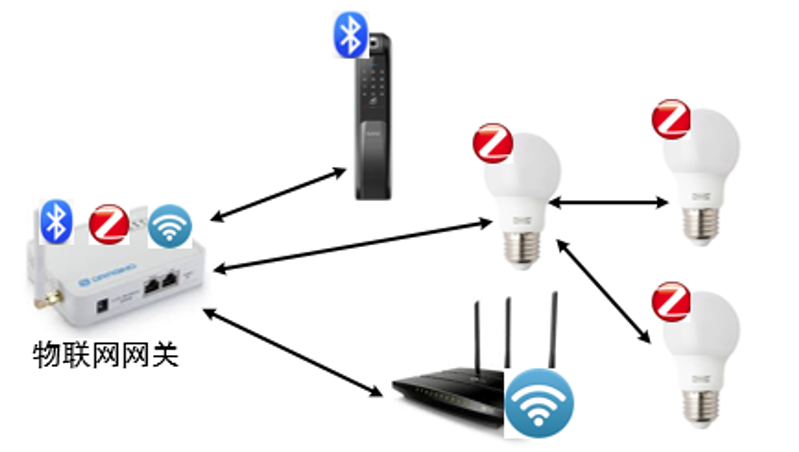 |
Low-power wireless: Recent years have witnessed many low-power wireless technologies, e.g., ZigBee, Bluetooth, LoRa, etc. These heterogeneous technologies raised several important research issues, such as how to combat against cross-technology interference, how to perform cross-technology communication without a gateway, how to interoperate over a wide range of IoT protocols. In this study, we aim to address several key issues in this field. We have proposed some novel techniques and systems include TinyNet [MobiSys'22], LoFi [INFOCOM'21], RT-BLE [INFOCOM'23], BTrack [INFOCOM'24], BLEW [SenSys'24], BoRa [MobiCom'25] and etc. |
Selected Publications (full list)
- [Security'26] Securing Retrieval-Augmented Code Generation via Contextual Knowledge Injection: A Case for Embedded IoT Applications
- [ICML'26] RTInfer: Real-Time Inference of Multiple DNNs on Edge GPUs
While edge GPUs are increasingly used for latency-critical DNN tasks, limited resources often fail to meet strict real-time (RT) requirements under concurrent workloads. Existing preemption and early-exit mechanisms often underutilize GPU resources through single-task queuing and sacrifice excessive accuracy during task bursts. To address this, we propose RTInfer, a novel system that enables concurrent RT task execution while balancing throughput and accuracy. RTInfer integrates an accuracy-calibrated lightweight variant co-optimization to generate efficient models, a memory-layout-aware scheduler to mitigate fragmentation during preemption, and an on-demand loading strategy to minimize host-to-GPU latency. Extensive evaluations demonstrate that RTInfer outperforms state-of-the-art methods by reducing average deadline miss rate (DMR) from 32.8% to 0% and improving accuracy by up to 56.5%.
- [IMWUT/UbiComp'25] One Model to Fit Them All: Universal IMU-based Human Activity Recognition with LLM-assisted Cross-dataset Representation
Human Activity Recognition (HAR) is essential for pervasive computing and intelligent interaction, with broad applications across various fields. However, there is still no one model capable of fitting various HAR datasets, severely limiting its applicability in practical scenarios. To address this, we propose oneHAR, an LLM-assisted universal IMU-based HAR system designed to achieve "one model to fit them all" -- just one model that can adapt to diverse HAR datasets without any dataset-specific operation. In particular, we propose Cross-Dataset neural network (CDNet) for the "one model," which models both the temporal context and spatial relationships of IMU data to capture cross-dataset representations, encompassing differences in device, participant, data collection position, and environment, etc. Additionally, we introduce LLM-driven data synthesis, which enhances the training process by generating virtual IMU data through three carefully designed strategies. Furthermore, LLM-assisted adaptive position processing optimizes the inference process by flexibly handling a variable combination of positional inputs. Our model demonstrates strong generalization across five public IMU-based HAR datasets, outperforming the best baselines by up to 46.9% in the unseen-dataset scenario, and 6.5% in the cross-dataset scenario.
- [CCS'25] TensorShield: Safeguarding On-Device Inference by Shielding Critical DNN Tensors with TEE
To safeguard user data privacy, on-device inference has emerged as a prominent paradigm on mobile and Internet of Things (IoT) devices. This paradigm involves deploying a model provided by a third party on local devices to perform inference tasks. However, it exposes the private model to two primary security threats: model stealing (MS) and membership inference attacks (MIA). To mitigate these risks, existing wisdom deploys models within Trusted Execution Environments (TEEs), which is a secure isolated execution space. Nonetheless, the constrained secure memory capacity in TEEs makes it challenging to achieve full model security with low inference latency. This paper fills the gap with TensorShield, the first efficient on-device inference work that shields partial tensors of the model while still fully defending against MS and MIA. The key enabling techniques in TensorShield include: (i) a novel eXplainable AI (XAI) technique exploits the model's attention transition to assess critical tensors and shields them in TEE to achieve secure inference, and (ii) two meticulous designs with critical feature identification and latency-aware placement to accelerate inference while maintaining security. Extensive evaluations show that TensorShield delivers almost the same security protection as shielding the entire model inside TEE, while being up to 25.35× (avg. 5.85×) faster than the state-of-the-art work, without accuracy loss.
- [MobiSys'25] Programming Embedded IoT Applications in Natural Language with IoTPilot
In recent years, the swift expansion of Internet of Things (IoT) applications has been notable. However, developing a comprehensive IoT application is highly challenging for nonexpert developers due to the highly diverse characteristics of embedded operating systems. LLM-based methods provide a paradigm for code generation through natural language, which can greatly simplify and accelerate the development of IoT applications. While promising, existing works have failed to account for the specific characteristics of embedded operating system, resulting in the lower quality of generated IoT code. In this paper, we present IoTPilot, an LLM-driven embedded IoT programming tool. We have observed that the conflicts between LLM internal APIs/headers and external OS-specific APIs/headers are key factors leading to the low quality of generated embedded IoT applications. Thus, we introduce two effective self-thinking chains to integrate internal LLM knowledge with external documentation, addressing conflicts in APIs and headers. We provide embedded IoT benchmarks (IoTEval), which include 45 embedded IoT applications built on RIOT, Zephyr, and Contiki OS. Results show that IoTPilot can improve the performance of IoT code generation on all the three embedded OSes compared with existing state-of-the-art (SOTA) methods.
- [MobiCom'25] LoRa over BLE
Bluetooth Low Energy (BLE) and LoRa are two dominant wireless protocols for the Internet of Things (IoT), each built with specific design goals, rendering them non-interoperable. Cross-Technology Communication (CTC) enables heterogeneous communication between BLE and LoRa. Despite these efforts, existing works suffer from low throughput and short communication range. In this paper, we present a novel system named BoRa, which enables bi-directional communication between the COTS BLE and COTS LoRa chips. BoRa can be readily run on COTS chips without any hardware modifications. We implement and evaluate BoRa with COTS BLE and LoRa chips. The results show that BoRa enables bi-directional cross-technology communication between COTS BLE and COTS LoRa chips, and long-range communication between two COTS BLE chips. It achieves up to 1500m communication range while ensuring 10 Kb/s throughput in outdoor Line-Of-Sight (LOS) scenarios. Besides, BoRa has up to 18.41~Kb/s higher throughput and up to 98.26% lower energy consumption compared with state-of-the-art methods.
- [SenSys'24] Combating BLE Weak Links with Adaptive Symbol Extension and
DNN-based Demodulation
Bluetooth Low Energy (BLE) is one of the most popular wireless protocols for building IoT applications because of its low energy, low cost, and wide compatibility nature. However, BLE communication performance can be easily affected by blockages because of its low transmission power. This paper presents BLEW, a technique to improve the BLE communication performance over weak links by exploiting adaptive symbol extension to combat channel interference and maximize network throughput. This paper addresses two key challenges. First, we propose a phase peak clustering-based approach for accurate preamble detection. It exploits the phase difference between sample points and coherently adds up the phase difference over the whole preamble to form a cluster with prominent phase peaks. After that, we propose a multi-domain DNN-based demodulator to enhance the symbol demodulation performance with low Signal-to-Noise Ratio (SNR). It fully extracts the temporal and spectrum features of the signal and effectively decodes BLE symbols. Furthermore, we model the BLE throughput considering the physical layer details of Commercial Off-The-Shelf (COTS) BLE chips, which can be used to choose the optimal symbol length according to the channel conditions. We implement BLEW with USRP B210 and COTS Nordic nRF52840 platform. The experiment shows BLEW can increase throughput up to 149.78 Kb/s compared with the native BLE. The phase peak clustering-based preamble detection method has an 8.27%-19.15% higher preamble detection rate and the DNN-based demodulator can bring up to 3.36 dB gain compared with existing methods.
- [IMWUT/UbiComp'24] ChatIoT: Zero-code Generation of Trigger-action Based IoT Programs
Trigger-Action Program (TAP) is a simple but powerful format to realize intelligent IoT applications, especially in home automation scenarios. Existing trace-driven approaches and in-situ programming approaches depend on either customized interaction commands or well-labeled datasets, resulting in limited applicable scenarios. In this paper, we propose ChatIoT, a zero-code TAP generation system based on large language models (LLMs). With a novel context-aware compressive prompting scheme, ChatIoT is able to automatically generate TAPs from user requests in a token-efficient manner and deploy them to the TAP runtime. Further, for those TAP requests including unknown sensing abilities, ChatIoT can also generate new AI models with knowledge distillation by multimodal LLMs, with a novel model customization method based on deep reinforcement learning. We implemented ChatIoT and evaluated its performance extensively. Results show that ChatIoT can reduce token consumption by 26.1-84.9% and improve TAP generation accuracy by 4.2-65.5% compared to state-of-the-art approaches in multiple settings. We also conducted a real user study, and ChatIoT can achieve 91.57% TAP generation accuracy.
- [ATC'24] SimEnc: A High-Performance Similarity-Preserving Encryption Approach for Deduplication of Encrypted Docker Images
Encrypted Docker images are becoming increasingly popular in Docker registries for privacy. As the Docker registry is tasked with managing an increasing number of images, it becomes essential to implement deduplication to conserve storage space. However, deduplication for encrypted images is difficult because deduplication exploits identical content, while encryption tries to make all contents look random. Existing state-of-the-art works try to decompress images and perform message-locked encryption (MLE) to deduplicate encrypted images. Unfortunately, our measurements uncover two limitations in current works: (i) even minor modifications to the image content can hinder MLE deduplication, (ii) decompressing image layers would increase the size of the storage for duplicate data, and significantly compromise user pull latency and deduplication throughput. In this paper, we propose SimEnc, a high-performance similarity-preserving encryption approach for deduplication of encrypted Docker images. SimEnc is the first work that integrates the semantic hash technique into MLE to extract semantic information among layers for improving the deduplication ratio. SimEnc builds on a fast similarity space selection mechanism for flexibility. Unlike existing works completely decompressing the layer, we explore a new similarity space by Huffman decoding that achieves a better deduplication ratio and performance. Experiments show that SimEnc outperforms both the state-of-the-art encrypted serverless platform and plaintext Docker registry, reducing storage consumption by up to 261.7% and 54.2%, respectively. Meanwhile, SimEnc can surpass them in terms of pull latency.
- [IPSN'24] dTEE: A Declarative Approach to Secure IoT Applications Using TrustZone
Internet of Things (IoT) applications have recently been widely used in safety-critical scenarios. To prevent sensitive information leaks, IoT device vendors provide hardware-assisted protections, called Trusted Execution Environments (TEEs), like ARM Trust- Zone. Programming a TEE-based application requires separate code for two components, significantly slowing down the development process. Existing solutions tackle this issue by automatic code partition while not successfully applying it in two complicated scenarios: adding trusted logic and interactions with secure peripherals. We propose dTEE, a declarative approach to secure IoT applications based on TrustZone. dTEE proposes a rapid approach that enables developers to declare tiered-sensitive variables and functions of existing applications. Besides, dTEE automatically transforms device drivers into trusted ones. We evaluate dTEE on four realworld IoT applications and seven micro-benchmarks. Results show that dTEE achieves high expressiveness for supporting 50% more applications than existing approaches and reduces 90% of the lines of code against handcrafted development.
- [WWW'24] Unlocking the Non-deterministic Computing Power with Memory-Elastic Multi-Exit Neural Networks
With the increasing demand for Web of Things (WoT) and edge computing, the efficient utilization of limited computing power on edge devices is becoming a crucial challenge. Traditional neural networks (NNs) as web services rely on deterministic computational resources. However, they may fail to output the results on non-deterministic computing power which could be preempted at any time, degrading the task performance significantly. Multi-exit NNs with multiple branches have been proposed as a solution, but the accuracy of intermediate results may be unsatisfactory. In this paper, we propose MEEdge, a system that automatically transforms classic single-exit models into heterogeneous and dynamic multi-exit models which enables Memory-Elastic inference at the Edge with non-deterministic computing power. To build heterogeneous multi-exit models, MEEdge uses efficient convolutions to form a branch zoo and High Priority First (HPF)-based branch placement method for branch growth. To adapt models to dynamically varying computational resources, we employ a novel on-device scheduler for collaboration. Further, to reduce the memory overhead caused by dynamic branches, we propose neuron-level weight sharing and few-shot knowledge distillation (KD) retraining. Our experimental results show that models generated by MEEdge can achieve up to 27.31% better performance than existing multi-exit NNs.
- [INFOCOM'24] Exploiting Multiple Similarity Spaces for Efficient and Flexible Incremental Update of Mobile Applications
Mobile application updates occur frequently, and they continue to add considerable traffic over the Internet. Differencing algorithms, which compute a small delta between the new version and the old version, are often employed to reduce the update overhead. Transforming the old and new files into the decoded similarity spaces can drastically reduce the delta size. However, this transformation is often hindered by two practical reasons: (1) insufficient decoding (2) long recompression time. To address this challenge, we have proposed two general approaches to transforming the compressed files (more specifically, deflate stream) into the full decoded similarity space and partially decoded similarity space, with low recompression time. The first approach uses recompression-aware searching mechanism, based on a general full decoding tool to transform deflate stream to the full decoded similarity space with a configurable searching complexity, even when it cannot be recompressed identically. The second approach uses a novel solution to transform a deflate stream into the partial decoded similarity space with differencing-friendly LZ77 token reencoding. We have also proposed an algorithm called MDiffPatch to exploit the full and partial decoded similarity spaces. The algorithm can well balance compression ratio and recompression time by exposing a tunable parameter. Extensive evaluation results show that MDiffPatch achieves lower compression ratio than state-of-the-art algorithms and its tunable parameter allows us to achieve a good tradeoff between compression ratio and recompression time.
- [INFOCOM'24] BLE Location Tracking Attacks by Exploiting Frequency Synthesizer Imperfection
In recent years, Bluetooth Low Energy (BLE) has become one of the most wildly used wireless protocols and it is common that users carry one or more BLE devices. With the extensive deployment of BLE devices, there is a significant privacy risk if these BLE devices can be tracked. However, the common wisdom suggests that the risk of BLE location tracking is negligible. The reason is that researchers believe there are no stable BLE fingerprints that are stable across different scenarios (e.g., temperatures) for different BLE devices with the same model. In this paper, we introduce a novel physical-layer fingerprint named Transient Dynamic Fingerprint (TDF), which originated from the negative feedback control process of the frequency synthesizer. Because of the hardware imperfection, the dynamic features of the frequency synthesizer are different, making TDF unique among different devices, even with the same model. Furthermore, TDF keeps stable under different thermal conditions. Based on TDF, we propose BTrack, a practical BLE device tracking system and evaluate its tracking performance in different environments. The results show BTrack works well once BLE beacons are effectively received. The identification accuracy is 35.38%-57.41% higher than the existing method, and stable over temperatures, distances, and locations.
- [NSDI'23] LinkLab 2.0: a Multi-tenant Programmable IoT Testbed for Experimentation with Edge-Cloud Integration
In this paper, we present EmLab, a completely programmable and controllable IoT testbed with the support of edge devices and cloud infrastructures. To be more specific, EmLab leverages a tiered architecture for the programmable devices and the management system to achieve scalability. To better support the integrated experiment among IoT, edge and cloud, EmLab provides several one-site programming supports and leverages the customizable offloading with serverless functions. Moreover, EmLab proposes a device-involved multi-tenancy approach to ensure responsiveness for concurrent requests. Furthermore, targeting 24/7 availability for experimenters, EmLab leverages proactive and reactive problem detection to improve the reliability of the testbed. Finally, we describe the supported research experiments and the outreach usage by external users. We also report lessons earned from the four-year operation of EmLab. EmLab is now publicly accessible1 from December 2018 and has supported experiments from 2,100+ users. The accumulated usage time across all the devices exceeds 17,300 hours.
- [MobiSys'22] TinyNet: a Lightweight, Modular, and Unified Network
Architecture for the Internet of Things
Interoperability among a vast number of heterogeneous IoT nodes is a key issue. However, the communication among IoT nodes does not fully interoperate to date. The underlying reason is the lack of a lightweight and unified network architecture for IoT nodes having different radio technologies. In this paper, we design and implement TinyNet, a lightweight, modular, and unified network architecture for representative low-power radio technologies including 802.15.4, BLE, and LoRa. The modular architecture of TinyNet allows us to simplify the creation of new protocols by selecting specific modules in TinyNet. We implement TinyNet on realistic IoT nodes including TI CC2650 and Heltec IoT LoRa nodes. We perform extensive evaluations. Results show that TinyNet (1) allows interoperability at or above the network layer; (2) allows code reuse for multi- protocol co-existence and simplifies new protocol design by module composition; (3) has small code size and memory footprint.
- [MobiSys'22, TC] Bring WebAssembly to Resource-constrained IoT Devices for Seamless Device-Cloud Integration
Recent years have witnessed the progressive in-tegration between IoT (Internet of Things) devices and the cloud server, which promotes the efficiency and interoperabilityof IoT applications. WebAssembly, known for its performance and portability, is considered a promising technology to bridge the heterogeneity between devices and the server. Nevertheless,the resource-constrained devices, which are commonly deployedin the wild, are difficult to participate in this device-cloud integration because it could hardly run WebAssembly efficiently. Hence, we propose WAIT, a lightweight WebAssembly runtimeon resource-constrained IoT devices for device-cloud integrated applications. WAIT is the first work to enable the Ahead-of-Time (AOT) compilation of WebAssembly on resource-constrained devices by leveraging several approaches to reduce memory usage. Moreover, WAIT introduces various safety checks at compile-time to guarantee the sandbox execution of WebAssembly and optimizes energy consumption for IoT devices. Results show that WAIT achieves 84.8×lower RAM usage compared with the state-of-the-art WebAssembly AOT runtime, and reduces 1.2×~4.9×energy consumption while guaranteeing the sandboxed execution of WebAssembly modules.
- [INFOCOM'21] WiProg: A WebAssembly-based Approach to
Integrated IoT Programming
Programming a complete IoT application usually requires separated programming for device, edge and/or cloud sides, which slows down the development process and makes the project hardly portable. Existing solutions tackle this problem by proposing a single coherent language while leaving two issues unsolved: efficient migration among the three sides and the platform dependency of the binaries. We propose WiProg, an integrated approach to IoT application programming based on WebAssembly. WiProg proposes an edge-centric programming approach that enables developers to write the IoT application as if it runs on the edge. This is achieved by the peripheral-accessing SDKs and annotations specifying the computation placement. WiProg automatically processes the program to insert auxiliary code and then compile it to WebAssembly At runtime, WiProg leverages dynamic code offloading with compact memory snapshotting to achieve efficient execution. WiProg also provides interfaces for the customization of offloading policies. Results on real-world applications and computation benchmarks show that WIPROG achieves an average reduction by 18.7%~54.3% and 20.1%~57.6% in terms of energy consumption and execution time.
- [INFOCOM'21] LoFi: Enabling 2.4GHz LoRa and WiFi Coexistence by Detecting Extremely Weak Signals
Low-Power Wide Area Networks (LPWANs) emerges as attractive communication technologies to connect the Internet-of-Things. A new LoRa chip has been proposed to provide long range and low power support on 2.4GHz. Comparing with previous LoRa radios operating on sub-gigahertz, the new one can transmit LoRa packets faster without strict channel duty cycle limitations and have attracted many attentions. Prior studies have shown that LoRa packets may suffer from severe corruptions with WiFi interference. However, there are many limitations in existing approaches such as too much signal processing overhead on weak devices or low detection accuracy. In this paper, we propose a novel weak signal detection approach, LoFi, to enable the coexistence of LoRa and WiFi. LoFi utilizes a typical physical phenomenon Stochastic Resonance (SR) to boost weak signals with a specific frequency by adding appropriate white noise. Based on the detected spectrum occupancy of LoRa signals, LoFi reserves the spectrum for LoRa transmissions. We implement LoFi on USRP N210 and conduct extensive experiments to evaluate its performance. Results show that LoFi can enable the coexistence of LoRa and WiFi in 2.4GHz. The packet reception ratio of LoRa achieves 98% over an occupied 20MHz WiFi channel, and the WiFi throughput loss is reduced by up to 13%.
- [IPSN'20, TOSN] SateLoc: a Virtual Fingerprinting Approach to Outdoor LoRa Localization using Satelite Images
With the increasing relevance of the Internet of Things (IoT) and large-scale Location-Based Services (LBS), LoRa localization has been attractive due to its low cost, low power and long range properties. However, existing localization approaches based on Received Signal Strength Indicator (RSSI) are either easily affected by signal fading of different land-cover types or labor-intensive. In this work, we propose SateLoc, a LoRa localization system that utilizes satellite images to generate virtual fingerprints. Specifically, SateLoc first uses high-resolution satellite images to identify land- cover types. With the path loss parameters of each land-cover type, SateLoc can automatically generate a virtual fingerprinting map for each gateway. We then propose a novel multi-gateway combination strategy, which is weighted by the environment interference of each gateway, to produce a joint likelihood distribution for localization. We implement SateLoc with commercial LoRa devices without any hardware modification, and evaluate its performance in a 227,500m2 urban area. Experimental results show that SateLoc achieves a median localization error of 47.1m, improving more than 40% compared to the state-of-the-art model-based approaches. More importantly, compared to the fingerprinting-based approach, SateLoc does not require the labor-intensive fingerprint acquisition process.
- [MobiCom'20] TinyLink 2.0: Integrating Device, Cloud, and Client Development for IoT Applications
The recent years have witnessed the rapid growth of IoT (Internet of Things) applications. A typical IoT application usually consists of three essential parts: the device side, the cloud side, and the client side. The development of a complete IoT application is very difficult for non-expert developers because it involves drastically different technologies and complex interactions between different sides. Unlike traditional IoT development platforms which use separate approaches for these three sides, we present TinyLink 2.0, an integrated IoT development approach with a single coherent language. It achieves high expressiveness for diverse IoT applications by an enhanced IFTTT rule design and a virtual sensor mechanism which helps developers express application logic with machine learning. Moreover, TinyLink 2.0 optimizes the IoT application performance by using both static and dynamic optimizers, especially for resource-constrained IoT devices. We implement TinyLink 2.0 and evaluate it with eight case studies, a user study, and a detailed evaluation of the proposed programming language as well as the performance optimizers. Results show that TinyLink 2.0 can speed up IoT development significantly compared with existing approaches from both industry and academia, while still achieving high expressiveness.
- [ToN'19] Understanding Path Reconstruction Algorithms in Multihop Wireless Networks
Low-power and multihop wireless networking is envisioned as a promising technology to achieve both energy efficiency and easy deployment for many Internet of Things (IoT) applications. Measuring packet-level path is crucial for managing large-scale multihop wireless networks. Packet-level path information encodes the routing path, a packet that takes through a network. The availability of packet-level path information can greatly facilitate many network management tasks. It is challenging to reconstruct packet-level paths using a small overhead, especially for large-scale networks. While there is a long list of existing path reconstruction algorithms, these algorithms focus on specific network scenarios, e.g., periodic monitoring networks or event detection networks. There lacks a unified model for systematically understanding and comparing the performance of these algorithms in different network scenarios. In this paper, we fill this gap by proposing an abstract model. Using this model, it is possible to derive a decision space for selecting the best algorithm for different networks. Furthermore, this model also guides us to devise better path reconstruction algorithms (cPath_T, cPath_S, and cPath_ST ) with respect to path reconstruction ratio. Extensive experiments demonstrate the prediction power of our model as well as the advantages of our proposed algorithms. The results show that our algorithm (cPath_ST ) improves a path reconstruction ratio from 94.4%, 34.3%, and 30.8% to 98.9%, 99.9%, and 60.1% on average in three network scenarios, respectively, compared with the best state-of-the-art algorithms.

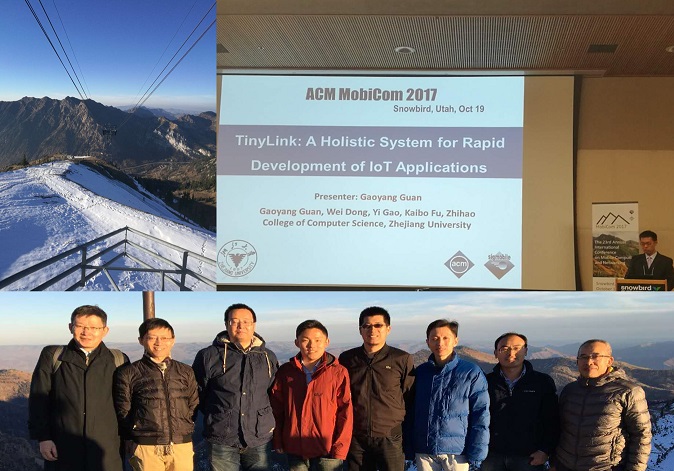
- [MobiCom'17, TOSN] TinyLink: a Holistic System for Rapid Development of IoT Applications
Rapid development is essential for IoT (Internet of Things) application developers to obtain first-mover advantages and reducethe development cost. In this paper, we present TinyLink, a holisticsystem for rapid development of IoT applications. The key ideaof TinyLink is to use atop-down approach for designing boththe hardware and the software of IoT applications. Developers write the application code in a C-like language to specify the key logic of their applications, without dealing with the details of the specific hardware components. Taking the application code as input, TinyLink automatically generates the hardware configuration as well as the binary program executable on the target hardware platform. TinyLink provides unified APIs forapplications to interact with the underlying hardware components.We implement TinyLink and evaluate its performance using real-world IoT applications. Results show that: (1) TinyLink achieves rapid development of IoT applications, reducing 52.58% of lines of code in average compared with traditional approaches; (2) TinyLink searches a much larger design space and thus can generate a superior solution for the hardware configuration, compared with the state-of-the-art approach; (3) TinyLink incurs acceptable overhead in terms of execution time and program memory.
- [TMC'17] Embracing Corruption Burstiness: Fast Error Recovery for ZigBee under Wi-Fi Interference
The ZigBee communication can be easily and severely interfered by Wi-Fi traffic. Error recovery, as an important means forZigBee to survive Wi-Fi interference, has been extensively studied in recent years. The existing works add upfront redundancy to in-packet blocks for recovering a certain number of random corruptions. Therefore the bursty nature of ZigBee in-packet corruptions under Wi-Fi interference is often considered harmful, since some blocks are full of errors which cannot be recovered and some blocks have no errors but still requiring redundancy. As a result, they often use interleaving to reshape the bursty errors, before applying complex FEC codes to recover the re-shaped random distributed errors. In this paper, we take a different view that burstiness may be helpful. With burstiness, the in-packet corruptions are often consecutive and the requirement for error recovery is reduced as "recovering any k consecutive errors" instead of "recovering any random k errors". This lowered requirement allows us to design far more efficient code than the existing FEC codes. Motivated by this implication, we exploit the corruption burstiness to design a simple yet effective error recovery code using XOR operations (called ZiXOR). ZiXOR uses XOR code and the delay is significantly reduced. More, ZiXOR uses RSSI-hinted approach to detect in packet corruptions without CRC, incurring almost no extra transmission overhead. The testbed evaluation results show that ZiXOR outperforms the state-of-the-art works in terms of the throughput (by 47%) and latency (by 22%).
- [INFOCOM'16] Mosaic: A Low-Cost Mobile Sensing System for Urban Air Quality Monitoring
Air quality monitoring has attracted a lot of attention from governments, academia and industry, especially for PM2.5 due to its significant impact on our respiratory systems. In this paper, we present the design, implementation, and evaluation of Mosaic, a low cost urban PM2.5 monitoring system based on mobile sensing. In Mosaic, a small number of air quality monitoring nodes are deployed on city buses to measure air quality. Current low-cost particle sensors based on light-scattering, however, are vulnerable to airflow disturbance on moving vehicles. In order to address this problem, we build our air quality monitoring nodes, Mosaic-Nodes, with a novel constructive airflow-disturbance design based on a carefully tuned airflow structure and a GPS-assisted filtering method. Further, the buses used for system deployment are selected by a novel algorithm which achieves both high coverage and low computation overhead. The collected sensor data is also used to calculate the PM2.5 of locations without direct measurements by an existing inference model. We apply the Mosaic system in a testing urban area which includes more than 70 point-of-interests. Results show that the Mosaic system can accurately obtain the urban air quality with high coverage and low cost.
- [IPSN'16] TinySDM: Software Defined Measurement in Wireless Sensor Networks
Network measurement, which provides detailed information about the behaviors of operational networks, is essential for network management in wireless sensor networks. In the literature, there have been many approaches focusing on measuring individual aspect of the network, e.g., per-packet routing path and per-hop delay. However, there lacks a general support for conducting different measurement tasks. When managing an operational network, a network operator often needs to switch the current measurement task to a different one,in order to diagnose the observed symptoms. In this paper, we propose TinySDM, a software-defined measurement architecturefor WSNs. TinySDM provides a general support for conducting different measurement tasks. TinySDM defines a set of carefully selected hooks that allow the users to easily execute their own measurement tasks. In addition, TinySDM provides a C-like language called TinyCode Language (TCL) to enable easy customization of measurement tasks. By only transmitting the binary code of the measurement task, TinySDM significantly reduces the size of the disseminated data compared with existing reprogramming approaches. We implement TinySDM on theTinyOS/TelosB platform and evaluate its performance extensively in a testbed with 60 nodes. We also use TCL to implement four specific measurement tasks. Results show that TinySDM is flexible, efficient and easily programmable.
- [INFOCOM'13, ToN] Measurement and Analysis on the Packet Delivery Performance in a Large Scale Sensor Network
Understanding the packet delivery performance of a wireless sensor network (WSN) iscritical for improving system performance and exploring future developments and applicationsof WSN techniques. In spite of many empirical measurements inthe literature, we still lack in-depth understanding on how and to what extent different factors contribute to the overall packet losses for a complete stack of protocols at large scale. Specifically, very little is known about: 1) when, where, and under what kind of circumstances packet losses occur; 2) why packets are lost. As a step toward addressing those issues, we deploy a large-scale WSN and design a measurement system for retrieving important system metrics. We propose MAP, a step-by-step methodology to identify the losses, extract system events, and perform spatial-temporal correlation analysis by employing a carefully examined causal graph.MAP enables us to get a closer look at the root causes of packetlosses in a low-power ad hoc network. This study validates some earlier conjectures on WSNs and reveals some newfindings. The quantitative results also shed lights for future large-scale WSN deployments.
- [INFOCOM'13, TOSN] Optimizing Relocatable Code for Efficient Software Update in Networked Embedded Systems
Recent advances in Microelectronic Mechanical Systems (MEMS) and wireless communication technologies have fostered the rapid development of networked embedded systems like wireless sensor networks. System software for these self-organizing systems often needs to be updated for a variety of reasons. We present a holistic software update (i.e., reprogramming) system called R3 for networked embedded systems. R3 has two salient features. First, the binary differencing algorithm within R3 (R3diff) ensures an optimal result in terms of the delta size under a configurable cost measure. Second, the similarity preserving method within R3 (R3sim) optimizes the binary code format for achieving a large similarity with a small meta data overhead. Overall, R3 achieves the smallest delta size compared with other software update approaches such as Stream, Rsync, RMTD, Zephyr, Hermes, and R2 (e.g., 50%–99% reduction compared to Stream and about 20%–40% reduction compared to R2). R3's implementation on TelosB/TinyOS is lightweight and efficient.
- [TC'11] SenSpire OS: A Predictable, Flexible, and Efficient Operating System for Wireless Sensor Networks
The development of a modern sensor network is difficult because of the long-term unattended operation mode, diverseapplication requirements, and stringent resource constraints. To address these issues, we present SenSpire OS, a predictable,flexible, and efficient operating system for wireless sensor networks. We improve system predictability by two-phase interrupt servicing and predictable thread synchronization; we achieve system flexibility by providing a hybrid model for both event-driven programming and multithreaded programming; we retain system efficiency by employing stack sharing and modular design. Moreover, we have designed a three-layer networking stack and an object-oriented programming language (CSpire) to enhance system usability and programming convenience. Having implemented SenSpire OS on three most commonly used sensor node platforms, we evaluate its performance extensively. Results show that SenSpire OS ensures predictable system performance, provides a flexible hybrid modelfor application programming, and is efficient in resource utilization.
- [SIGMETRICS'10, TECS] Elon: Enabling Efficient and Long-Term Reprogramming for Wireless Sensor Networks
We present a new mechanism called Elon for enabling efficient and long-term reprogramming in wireless sensor networks. Elon reduces the transferred code size significantly by introducing the concept of replaceable component. It avoids the cost of hardware reboot with a novel software reboot mechanism. Moreover, itsignificantly prolongs the reprogrammable lifetime (i.e., the time period during which the sensor nodes canbe reprogrammed) by avoiding flash writes for TelosB nodes. Experimental results show that Elon transfersup to 120–389 times less information than Deluge, and 18–42 times less information than Stream. The software reboot mechanism that Elon applies reduces the rebooting cost by 50.4%–53.87% in terms of beaconpackets, and 56.83% in terms of unsynchronized nodes. In addition, Elon prolongs the reprogrammable lifetime by a factor of 3.3.



Grants
- PI, Principles and Construction Methods for Ubiquitous and Trusted IoT Operating System, NSFC Grant No. 92582114, 2026.01~2028.12.
- PI, Research on the Theory and Methods of Distributed LLM Deployment in Heterogeneous Computing Environments, Major Program of Zhejiang NSF Grant No. LD26F020002, 2026.01~2028.12.
- PI, IoT Network Architecture for Interoperating across Heterogeneous Wireless Protocols, NSFC Grant No. 62072396, 2021.01~2024.12.
- PI, Research on Key Techniques for Cloud-Edge Integrated Data Collection, sub-project under National Key R&D Program of China, No. 2019YFB1600700, 2019.12~2022.11.
- PI, Low Power Wireless Technologies for the IoT, Zhejiang Provincial Natural Science Foundation for Distinguished Young Scholars, No. LR19F020001, 2019.01~2022.12.
- PI, Wireless Transmission Characteristics and Key Technologies under Cross-Technology Interference, NSFC Grant No. 61772465, 2018.1~2021.12.
- PI, Event-based Code Diagnosis for Networked Embedded Systems, NSFC Grant No. 61472360, 2015.1~2018.12.
- PI, Software Update for Sensor Networks, NSFC Grant No. 61202402, 2013.1~2015.12.
- PI, Reprogramming Models and Protocols for Sensor Networks, Doctoral Program of Higher Education, No. 20120101120179, 2013.1~2015.12.
- PI, Air Quality Monitoring with Mobile Sensor Networks, Commonwealth Project of Zhejiang Province, No. 2015C33077, 2015.1~2016.12.
- Co-PI, Zhejiang Provincial Platform of IoT Technology, Grant No. 2013E60005, 2012.1~2015.12.
- PI, Low Power Wireless Technologies for the IoT, Fundamental Research Funds for the Central Universities, No. 2017FZA5013, 2017.1~2018.12.
- PI, Mobile Sensing System for Air Quality Monitoring, Fundamental Research Funds for the Central Universities, No. 2016FZA5010, 2016.1~2016.12.
- PI, Network Tomography for Large-Scale Sensor Networks, Fundamental Research Funds for the Central Universities, No. 2014QNA5021, 2014.1~2015.12.
- PI, Energy-Efficient Reprogramming for Sensor Networks, Fundamental Research Funds for the Central Universities, No. 2012QNA5007, 2012.3~2013.12.
Awards
- Changjiang Distinguished Professor, China's Ministry of Education, 2025.
- CCF Second Class Award for Technological Invention 2025 (1/6)
- First Prize in Teaching Achievement Award of Zhejiang University, 2025 (2/9).
- One of the Best Storage Papers in USENIX ATC, 2024.
- Zhejiang Provincial First Class Award for Science and Technology Progress, 2023 (1/13).
- Excellant Textbook Award, Zhejiang Computer Federation, 2023.
- CCF Distinguished Awards for Science and Technology Progress, 2021.
- Second Class in Self-made Equipment of National Universities, 2021.
- Outstanding Achievement Award, Zhejiang Computer Federation, 2020.
- Outstanding Service Award, Zhejiang Computer Federation, 2019.
- CCF-Tencent Riho-Bird Excellent Patent Award, 2017.
- Best Video Award, ACM MobiCom 2017.
- Zhejiang Provincial 151 Talent Project, 2017.
- Best Paper Award, ACM SIGCOMM China Symposium, 2017.
- Best Paper Award, 12th IEEE Int'l Conf. on Mobile Ad-hoc and Sensor Networks (MSN), 2016.
- CCF-Tencent Riho-Bird Research Award Funds, 2016.
- CCF-Intel Young Faculty Researcher Program, 2015.
- First Class Science and Technology Progress Awards by Zhejiang Province, 2014 (6/13).
- Nominee for the National Excellent Doctorial Dissertation Award, China's Ministry of Education, 2013.
- Qiushi Distinguished Young Scholar of Zhejiang University, 2013.
Invited Talks
- "LLM empowered IoT", CCF Workshop on Computer Network and New Technology (WCNT), Chongqin, May 16, 2026.
- "LLM empowered IoT", 12th Int'l Conf. on Sensor-Cloud and Edge Computing Systems, Xuzhou, May 9, 2026.
- "IoT Confidential Computing" (物联网机密感知计算), Forum in CWSN 2025, Hangzhou, Sept, 2025.
- "LLM empowered IoT" (大模型赋能物联网), Xidian Hangzhou Research Institute, April 2025.
- "Cloud-Edge Integrated Computing for AIoT" (面向AIoT的云边融合计算), AI Conference of Jiangsu Province, Wuxi, Aug. 26, 2022.
- “Low Code Development for IoT” (物联网低代码开发), ACM SIGBED China Forum, ACM TURC, Hefei, July 30, 2021.
- “Low Code Development for IoT” (物联网低代码开发), Computer Architecture Forum, Computer Conference of Jiangsu Province, Xuzhou, June 27, 2021.
- "Taming the Challenges in the IoT 2.0 era" (物联网2.0时代的挑战和机遇), Nanjing University, Dec. 8, 2019.
- “From Ideas to Prototypes: Rapid Development of IoT Applications” (从创新到原型: 物联网应用快速开发), Aliyun Yunqi Conference (阿里云云栖大会), Shenzhen, March 29, 2018.
- “From Ideas to Prototypes: Rapid Development of IoT Applications”, IoT Scientist Forum, Hangzhou, Nov. 27, 2017.
- "IoT and Smart Home", Invited Talk, China Mobile Digital Home Competition, Hangzhou, June 23, 2017.
- “My Road of Teaching and Research in Computer Networks”, Invited Talk, 6th National Symposium on Computer Network Education, Ningbo University, April 22-23, 2017.
- “TinyLink: a Holistic System for Rapid Development of IoT Applications”, Invited Talk, 11st Int'l Workshop on IoT and Cloud Computing, Wuxi, Dec 21-25. 2016.
- "Air Quality Monitoring with Mosaic", Invited Talk, Northwest University, Sept 18, 2016.
- "Air Quality Monitoring with Mosaic", Invited Talk, Ningbo University, April 26, 2016.
- "Air Quality Monitoring with Mosaic", The 10th ACM International Workshop on IoT and Cloud Computing, Wuxi, Dec. 21-25, 2015.
- "Towards a Software-Defined Architecture for the Internet of Things", Annual Forum for CCF Excellent Doctoral Dissertation Award, Sun Yat-sen University, Guangzhou, China, August 7-9, 2015.
- "Towards a Software-Defined Architecture for the Internet of Things", The 9th ACM International Workshop on IoT and Cloud Computing, Wuxi, China, July 2015.
- "Towards a Software-Defined Architecture for the Internet of Things", SFU-ZJU Joint Workshop on Big Data, Hangzhou, China, June 26, 2015.
- "Ten Rules for Research", The 2nd EmNets Summer Seminar, August 27-30, 2014.
Misc
- ZJU timer for teaching
- CS labs in Zhejiang University: EAGLE-lab, CCNT, DCD, CAD/CG, nmlab
- Networking Conferences Statistics
- Technical Reports [ EECS@UC Berkeley | CSE@Washington | MSU ]
- Prof. John Stankovic, Prof. Chenyang Lu, Prof. Guoliang Xing, Prof. Tian He, Prof. Gang Zhou
- Prof. David Culler, Prof. Philip Levis, Prof. Matt Welsh, Prof. Prabal Dutta,
- Prof. Dina Katabi, Prof. Sachin Katti, Prof. Shyam Gollakota, Prof. Swarun Kumar
- Prof. Kang Shin, Prof. Tarek F. Abdelzaher, Prof. Xinyu Zhang
- Others: Prof. Mani B. Srivastava, Prof. Deepak Ganesan, Prof. Romit, Prof. Lothar, Prof. Suman Banerjee, Prof. Yingying Chen